
A new procedure was introduced in the public health of Republic of Macedonia.
For the first time, an Artificial Urinary Sphincter was implanted in two Macedonian patients at the University Clinic of Urology in Skopje.
Artificial urinary sphincter – Lifeline for patients with incontinence
Prostate carcinoma is the most frequently diagnosed malignant disease in men over 50 years of age. It is estimated that 1.4 million men get this cancer every year, and 375,000 of them die as a direct result of it. Thousands of surgical procedures are performed worldwide in order to radically cure this disease. The most common complication of this type of surgery is urinary incontinence, which is defined as the involuntary leakage of urine that is accentuated during activities such as walking, lifting weights, coughing and sneezing. This complication occurs in 10-15% of all operated patients in the first year. Urinary incontinence greatly impairs the patient’s quality of life and represents a major social, hygienic and economic problem.
Conservative treatment of urinary incontinence includes pelvic exercises, lifestyle changes, hygiene-dietary modifications, electrical stimulation, treatment with antimuscarinics, or a combination of these methods. If the involuntary leakage of urine lasts more than 12 months after the operative treatment, in most cases it remains as a permanent consequence. According to the guide of the European Association of Urology, the gold standard for the permanent solution of this type of urinary incontinence is the implantation of an artificial urinary sphincter. Implantation of the artificial sphincter significantly improves continence in most patients, and enables complete healing in 80% of patients. Until now, there was no solution for this condition in public health and such patients were referred to one of the world’s centers for functional and reconstructive urology.
After acquiring appropriate expertise in foreign centers and working on 3D printed models of the small pelvis in the Republic of Türkiye, a cadaver course as well as a clinical internship in the operating room at the Clinical Center in Leuven in Belgium under the mentorship of professors Emre Khouri and Frank Van Der A, for the first time at the University Clinic of Urology, an artificial urinary sphincter was implanted in two Macedonian patients. The interventions were performed by Senior Research Associate Dr. Ognen Ivanovski under the direct supervision of Professor Dr. Sergey Vladislavovich Kotov from the Pirogov Urology Clinic in Moscow, Russia. With the introduction of this new procedure, the university clinic for urology is counted among the few centers that are licensed to perform this type of procedure. The operation of implanting a sphincter is fully covered by the Health Fund of the Republic of Macedonia and represents a new service in public health.

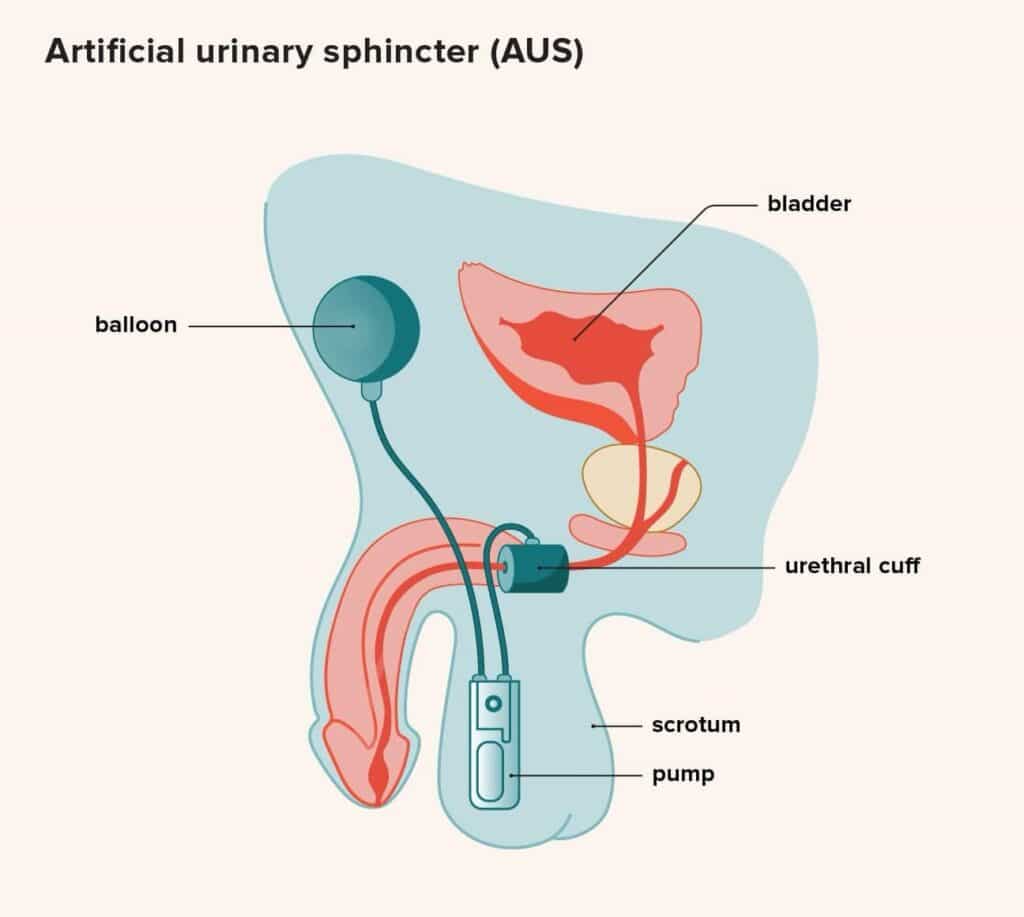
Artificial urinary sphincter AMS 800. The device consists of three components: a cuff that is implanted around the urethra, a balloon for pressure regulation and a pump that is placed in the scrotal sac and is easily accessible to the patient. Urination takes place when the patient presses on the pump

Dr. Ognen Ivanovski and Dr. Sergey Vladislavovich Kotov in the operating room

Dr. Ognen Ivanovski and Dr. Sergey Vladislavovich Kotov after successfully completed interventions
Leave a reply